Protecting Yield Potential: Why Fungicide Still Matters in Tight-Margin Years
Article By: Skylar Ferris, Patriot Drone Services LLC
As input costs continue to pressure farm profitability, many growers are taking a hard look at every line item in their operation. While cutting unnecessary expenses is important, agronomists continue to stress that fungicide applications are one area where reducing investment can often cost more in lost yield potential than it saves upfront.
Disease pressure can vary widely from season to season, but when conditions are favorable, fungal diseases can rapidly impact plant health, reduce photosynthetic activity, and ultimately limit yield and grain quality. A properly timed fungicide application helps protect plant health during critical growth stages, allowing crops to maximize their yield potential.
In the summer of 2023, disease pressure was minimal. That year was dry and hot, creating an environment in which disease was less likely to thrive. In the past, a grower might have decided not to pursue or perform a fungicide application. However, I had customers report a positive ROI even when factoring in the fungicide application.
Fungicide as a Yield Protection Tool
Today's fungicides do more than simply suppress disease. Many products also provide plant health benefits that can improve standability, reduce plant stress, and maintain green leaf area later into the season.
In crops like corn and soybeans, protecting leaf tissue during reproductive stages is critical. Once disease takes hold, the crops can lose efficiency quickly. Fungicides work best as a preventative management tool rather than a rescue treatment after significant infection is already present.
When we use pesticides such as herbicides and insecticides, we try to control or eliminate a specific pest. Whether it is insects or weeds, the goal is to reduce their impact. Fungicide functions differently. Rather than trying to eliminate the disease itself, we are applying a "medicine" to help the crop fight disease. In the simplest terms, we are trying to support the plant's "immune system."
In years where commodity prices are tighter, protecting every bushel becomes even more important. A healthy crop at harvest often provides the best opportunity to maintain profitability.
Why Application Timing Matters
Even the best fungicide program can fall short if the application is not made at the proper time. Disease development can move quickly, and weather conditions often create narrow windows for effective treatment.
Traditional ground rigs can sometimes be delayed by wet field conditions or taller crop canopies later in the season. Delayed applications may reduce effectiveness and increase crop stress from wheel traffic. In some cases, traditional forms of aerial application, such as planes and helicopters, are not available to farmers due to high demand, limited availability, smaller field sizes, or hazards such as trees and power lines that make it difficult for a pilot to safely make an effective application.
That is where drone application technology is becoming an increasingly valuable tool for growers.
The Benefits of Drone Application
This article is not intended to suggest that drone application is superior to traditional application methods, whether ground or aerial. Rather, drone application is another tool growers can use to help raise the highest-yielding crop possible. Farmers should consider all three methods when deciding what would benefit them and their crop.
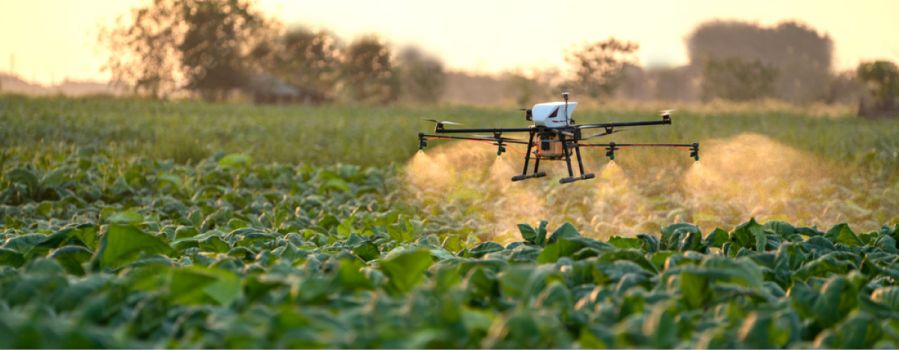
Agricultural spray drones allow fungicide applications to be made quickly, accurately, and without crop damage from ground equipment. Because drones operate above the canopy, there is no wheel track damage, which helps preserve yield potential across the field.
Drone application also offers several advantages:
- Ability to spray when fields are too wet for traditional equipment
- Reduced crop damage from tire tracks
- Precise application targeting
- Faster response to changing disease pressure
- Ability to treat smaller or irregularly shaped fields efficiently
Most importantly, drones help growers hit critical application windows on time, which is often the key factor in maximizing fungicide performance.
Proper Application Still Matters
Regardless of the application method, proper coverage remains essential. If you, as a farmer, have tried fungicide in the past and have not seen the results you were looking for or hoping to achieve, here are some things to consider. Successful fungicide application is not as simple as "put some fungicide in the tank and send it." Making the most of an application depends on factors such as droplet size, carrier volume, canopy penetration, and environmental conditions at the time of spraying. It also involves mixing in the correct adjuvants, such as a good drift-reduction agent and deposition aid. Even the pH value of the water used as a carrier comes into play. Without attention to details like these, the residual efficacy of a fungicide application could drop significantly, taking it from weeks down to hours.
Modern agricultural drones are designed specifically to optimize coverage and consistency while minimizing drift concerns. When operated correctly, drone application can provide excellent canopy penetration and highly effective disease control.
As agriculture continues to adopt new technology, drones are proving to be more than just a trend - they are becoming an important management tool that helps growers protect yield, improve efficiency, and make timely decisions during critical periods of the growing season.
For growers evaluating where to reduce costs this season, fungicide protection remains one investment that can help safeguard the productivity and profitability of every acre.
Skylar Ferris is the owner of Patriot Drone Services LLC, a full-service drone application company located in Durand, WI. Beyond providing fungicide application services, Patriot Drone Services LLC is a dealer of Agri Spray drones, offering sales of complete drone units, parts, and repairs.